

Looking back on your career path, what experiences have most shaped your thinking about flowers and floristry?
There have been several defining moments throughout my career, but the experiences that have stayed with me most are those where floristry crossed into the world of art. Those opportunities reminded me that flowers can be far more than decoration—they can be a true artistic medium.
One project that stands out was an opening-night installation for an art gallery in Manchester, England. I positioned three large clear glass cylinders in a row, each filled three-quarters with water tinted with a delicate blush of pink dye. Floating from the surface of each vase was a single pink baby pineapple on its stem. In such a contemporary setting, the simplicity was incredibly powerful. It was understated, unexpected and visually striking.
Moments like that reinforced my belief that floral design is about creating emotion as much as arranging flowers.
You’ve worked in various parts of the world. How have these experiences influenced your style and the way you build relationships with clients?
At this point, I’m an amalgamation of everywhere I’ve lived and worked—even my accent reflects that.
Working internationally taught me versatility. My role isn’t to impose my own style; it’s to understand my client’s personality, message and vision, then translate that into flowers. Whether the brief is contemporary, classic, luxurious or understated, the design should always feel authentic to them.
Those experiences also taught me never to judge a book by its cover. Some of the most rewarding and creative projects have come from clients with modest budgets. Limitations often encourage the most innovative thinking, and I genuinely enjoy that challenge.
Is there a project, event, or client encounter that has particularly changed your perspective on the role of a florist in today’s world?
There have been many, but if I had to choose one it would be attending the very first Chapel Designers event in London.
The atmosphere was electric. It brought together an incredibly talented group of florists who shared ideas freely and celebrated each other’s creativity. I left inspired, energised and with a completely different perspective on what our industry could become when we collaborate instead of compete.
It transformed not only my business, but also my professional network. Many of those friendships remain today, and I know they’ll last a lifetime.
How would you describe the current floristry market in Northern Ireland? What changes do you consider the most important in
recent years?
How would you describe the current floristry market in Northern Ireland? What changes do you consider the most important in recent years?
The standard of floristry in Northern Ireland has improved enormously over the past two decades.
The standard of floristry in Northern Ireland has improved enormously over the past two decades.
When I returned home around 17 years ago after working elsewhere, much of the retail market felt quite traditional. I focused on weddings, education and studio work because there were relatively few florists working in the more natural, contemporary style I had become accustomed to in London.
Today, the industry has evolved significantly. I could easily name fifteen florists in Northern Ireland whose work I genuinely admire. The overall standard is much higher, although I believe we should always continue learning, evolving and challenging ourselves creatively.
From the perspective of someone running your own business, what distinguishes floristry in Northern Ireland and the UK from other
countries?
I think culture plays a huge role.
Many independent high-street florists are still asked to create traditional funeral tributes and arrangements that have changed very little over the past 30 years. There’s comfort in tradition, but it can also slow innovation.
Commercially, one of the industry’s biggest challenges is pricing. When I began my career over three decades ago, the average gift bouquet cost around £30-35. Remarkably, many florists are still selling bouquets within that same price range today despite dramatically increased costs. That presents one of the greatest challenges for the future sustainability of independent floristry.
During your career, you’ve worked on both prestigious projects for discerning clients and run a local floristry business. What differences do you see between the expectations of a luxury client and a client visiting a local flower shop, and what can both groups learn from each other?
Ultimately, both customers want exactly the same thing—they want to feel delighted rather than disappointed.
Luxury clients may have higher expectations in terms of scale, detail and overall experience, but delight isn’t determined by budget. A florist who truly understands their craft can create something extraordinary with only a handful of stems.
Good floristry is about creativity, thoughtfulness and understanding the emotional impact flowers can have. Those principles apply equally whether you’re creating for a luxury event or a customer buying flowers for someone they love.
Social media has changed the way florists present their work and communicate with clients. How have Instagram and other platforms influenced the florist industry from your perspective?
I’ve embraced every platform that’s come along.
When I started my own business, Facebook was relatively new, then Instagram arrived, followed by Pinterest. I even remember marketing experts suggesting small business owners should abandon Pinterest as it was supposedly losing relevance. I completely disagreed.
I genuinely believe the floral and wedding industries helped keep Pinterest alive because it remains one of the greatest sources of inspiration for brides and designers alike.
The biggest benefit of social media has been access. Florists can now see extraordinary work from across the world instantly, learn from one another and continually raise creative standards.
What skills, qualities, and values will a florist need to be successful in the next ten years?
I hope the qualities that remain most valuable will always be creativity, excellent customer service and genuine human connection.
I also believe we’ll continue to see floristry move closer to the worlds of art, sculpture and large-scale installation design.
Artificial intelligence will undoubtedly change aspects of our industry, but I’m optimistic about the opportunities it will create rather than fearful of it. Digital confidence, adaptability and a willingness to embrace new technology will become essential alongside traditional craftsmanship.
Have you had any experience with Polish floristry? How do you perceive the Polish market, and are there any Polish florists or projects that have caught your attention?
I’ve had the pleasure of working with several Polish florists over the years, and they’ve always been hardworking and highly skilled.
That said, I wouldn’t claim to know the Polish market well enough to comment in depth. It’s an area I’d genuinely like to learn more about, particularly as European floristry continues to influence one another through education and social media.
If you could share one thought with florists and flower lovers around the world, what would it be?
Keep pushing forward creatively.
Flowers are a medium, just like paint, clay or stone. They simply happen to be alive. They offer colour, texture, movement, fragrance and endless possibilities for artistic expression.
To anyone considering a career in floristry, I’d simply say: think bigger than bouquets. Our industry offers opportunities to create art, shape experiences and leave lasting memories.
Never stop exploring what’s possible.
About Jil Peterson
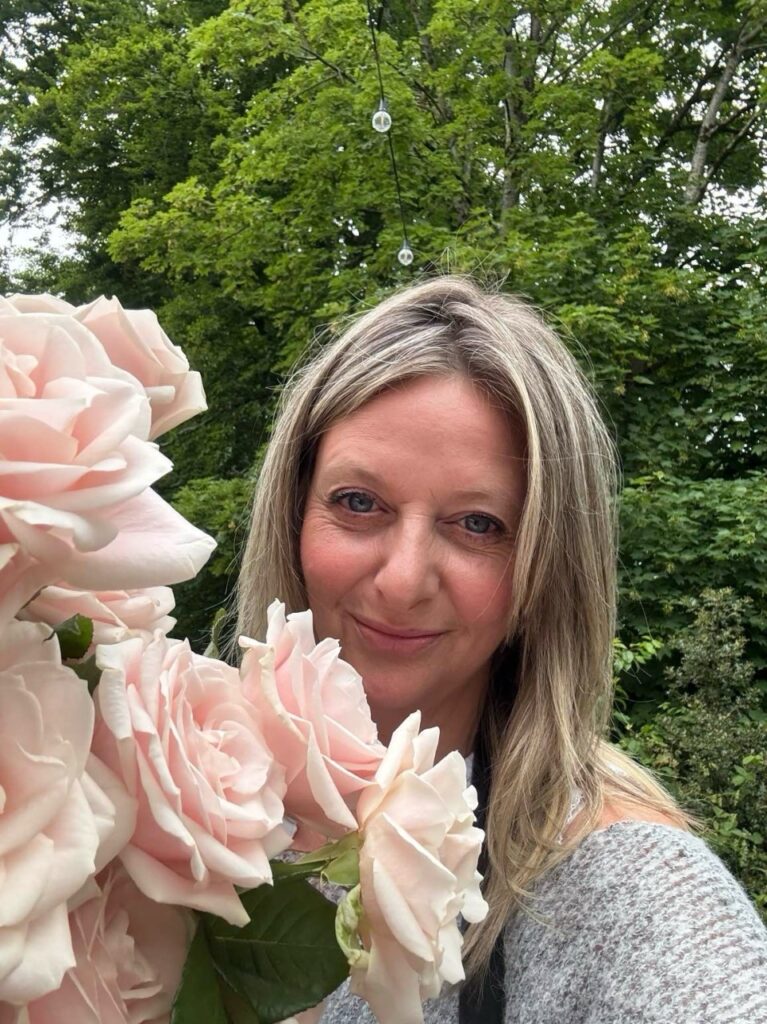
Flowers have taken me all over the world and given me a career beyond anything I imagined. Floristry was never my backup plan—it was always my first choice.
My foundations were shaped during my professional training under renowned British florist Ian Lloyd, where I was introduced to exceptional standards of craftsmanship and an infectious passion for the industry. Those early experiences gave me the confidence to see flowers not simply as products, but as an artistic medium.
Over the past 35 years I’ve been fortunate to work internationally, create for luxury clients, teach, mentor and run my own successful business. Throughout it all, I’ve remained driven by one thing: the desire to push floral design beyond traditional arrangements and into the world of sculpture, installation and artistic expression.
After more than three decades, I still believe floristry is one of the most exciting creative industries in the world—and I’m as passionate about its future as I was on my very first day.


